Evidence-Based Marketing in Healthcare: The Ethical Future of Patient Growth

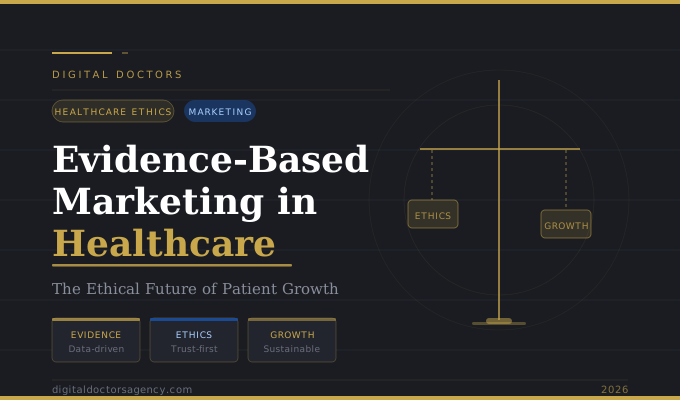
Evidence-based marketing in healthcare is the practice of using verified clinical data, real patient outcomes, and ethical communication standards to promote services. In 2026, it’s becoming the gold standard because it builds trust, improves patient decisions, and aligns with regulatory expectations—making it both effective and compliant.
What Is Evidence-Based Marketing in Healthcare?
Evidence-based marketing in healthcare is a strategy that uses clinical research, real patient outcomes, and verifiable data to support marketing claims and guide patient decisions.
But let me be blunt…
This isn’t just a trend.
It’s a correction.
For years, healthcare marketing leaned heavily on:
- Generic claims
- Emotional appeals
- Vague “best-in-class” messaging
Now? Patients—and regulators—expect more.
What Counts as “Evidence”?
Not everything qualifies.
Valid Evidence Examples:
- Clinical study results
- Before-and-after patient outcomes (with consent)
- Treatment success rates
- Peer-reviewed research
- Real patient testimonials (verifiable)
What doesn’t count:
- Unverified claims
- Stock testimonials
- Exaggerated promises
👉 If you can’t back it up, don’t market it.
Why Evidence-Based Marketing Matters More Than Ever
It matters because healthcare is a high-trust industry, and evidence-based marketing strengthens credibility while reducing risk.
1. Patient Trust Is at an All-Time Low
Here’s something I’ve noticed working with clinics…
Patients are skeptical.
They’ve seen:
- Overpromising ads
- Misleading before/after photos
- Conflicting medical advice online
So when a clinic shows real data, it stands out instantly.
2. Compliance Isn’t Optional
Healthcare marketing isn’t like eCommerce.
You’re dealing with:
- Patient privacy laws
- Advertising regulations
- Ethical obligations
Evidence-based marketing helps you stay aligned with:
- Truth-in-advertising standards
- Medical board guidelines
- Patient consent requirements
3. AI & Search Engines Reward Evidence
This is where it gets interesting…
Modern search systems prioritize:
- Credible sources
- Structured data
- Verified claims
Content that includes:
- Statistics
- Research citations
- Expert insights
…is far more likely to appear in AI-generated answers and top rankings.
How Evidence-Based Marketing Actually Works
It works by integrating clinical data and real outcomes into every stage of your marketing funnel.
The Evidence-Based Funnel
Let’s break this down in a practical way:
1. Awareness Stage
- Publish educational content
- Use statistics and research
👉 Example:
“Studies show 92% success rate for this procedure…”
2. Consideration Stage
- Share case studies
- Provide treatment comparisons
👉 Example:
“Here’s how our outcomes compare to industry benchmarks…”
3. Decision Stage
- Show proof
- Highlight real patient experiences
👉 Example:
Before/after results with verified consent
4. Retention Stage
- Collect feedback
- Showcase long-term results
👉 This reinforces trust and drives referrals.
Ethical Considerations You Can’t Ignore
Ethical healthcare marketing requires transparency, patient consent, and accuracy in all claims.
Key Ethical Principles
1. Transparency
Be clear about:
- Risks
- Limitations
- Expected outcomes
2. Accuracy
No exaggeration. No cherry-picking data.
3. Consent
Always obtain permission for:
- Testimonials
- Images
- Case studies
Here’s where clinics get into trouble…
They use:
- Edited before/after photos
- Selective success stories
- Vague claims
That’s risky.
And honestly? Patients can tell.
Evidence-Based vs Traditional Marketing
Evidence-based marketing focuses on proof and trust, while traditional marketing relies more on persuasion and branding.
Comparison Table
| Traditional Marketing | Evidence-Based Marketing |
|---|---|
| Emotional claims | Data-driven insights |
| Generic messaging | Specific outcomes |
| Short-term conversions | Long-term trust |
| Higher risk | Compliance-friendly |
| Low differentiation | High credibility |
How to Implement Evidence-Based Marketing (Step-by-Step)
Start by collecting data, validating claims, and integrating evidence into your content and campaigns.
Practical Steps
- Audit your current messaging
- Remove vague claims
- Collect real data
- Outcomes, success rates, patient feedback
- Create proof-driven content
- Case studies, statistics, comparisons
- Train your team
- Align marketing with clinical reality
- Stay compliant
- Review regulations regularly
Authority Positioning: Why This Sets You Apart
Evidence-based marketing positions your clinic as a trusted authority rather than just another provider.
Here’s the shift…
You’re no longer saying:
“We’re the best.”
You’re showing:
“Here’s the data that proves our results.”
That’s powerful.
And rare.
What happens when you do this right?
- Higher trust
- Better patient quality
- Stronger brand reputation
- Long-term growth