CRM & Automation for Clinics: The Hidden Growth Engine

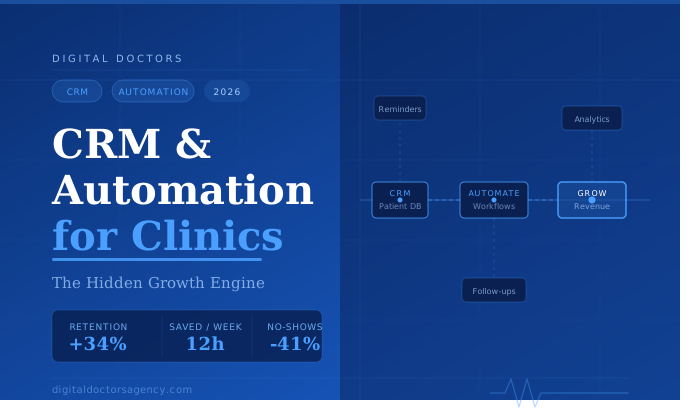
A CRM for clinics is a centralized system that manages patient data, automates communication, and improves patient acquisition and retention. In 2026, clinics using CRM and automation see 30%–60% higher conversion rates and significantly lower no-show rates by streamlining the entire patient journey—from inquiry to follow-up.
What Is a CRM for Clinics (And Why It Matters)?
A CRM for clinics is software designed to manage patient relationships, automate communication, and track the entire patient journey—from first contact to long-term retention.
But here’s the thing…
Most clinics think CRM = contact storage.
That’s outdated.
Modern healthcare CRM systems handle:
- Appointment scheduling
- Automated reminders
- Lead tracking
- Email & SMS follow-ups
- Patient segmentation
- Review requests
👉 In other words, it’s not just a database.
It’s your growth engine.
How CRM & Automation Actually Drive Revenue
CRM systems increase revenue by improving lead conversion, reducing missed opportunities, and enhancing patient retention through automation.
Let’s break this down with a real-world scenario.
Mini Case Example
A 3-location dental clinic I worked with had:
- 120+ monthly leads
- Only ~35% conversion rate
Problem?
No structured follow-up.
We implemented:
- Automated SMS follow-ups
- Call reminders for staff
- Missed-call text-back system
Within 90 days:
- Conversion jumped to 58%
- Revenue increased without increasing ad spend
Same leads. Better system.
The Clinic Funnel (Explained Simply)
A clinic funnel tracks the journey from awareness to booked appointment and long-term retention, optimized through CRM automation.
Funnel Stages Breakdown
| Stage | What Happens | CRM Role |
|---|---|---|
| Awareness | Patient finds your clinic | Track source (ads, SEO) |
| Interest | Patient visits site or calls | Capture lead data |
| Consideration | Patient compares options | Automated follow-ups |
| Conversion | Patient books appointment | Booking automation |
| Retention | Patient returns | Reminders & reactivation |
Funnel Diagram (Explained in Words)
Think of it like this:
- Top of Funnel (Leads coming in)
Ads, SEO, referrals → captured in CRM - Middle of Funnel (Follow-up stage)
Automated SMS, emails, reminders - Bottom of Funnel (Conversion)
Booking confirmations, staff alerts - Post-Funnel (Retention)
Review requests, recall reminders, reactivation campaigns
👉 Without CRM, this funnel leaks badly.
👉 With automation, it becomes predictable revenue.
What Features Should a CRM for Clinics Have?
The best CRM for clinics includes automation, patient communication tools, scheduling integration, and compliance features.
Must-Have Features Checklist
- ✅ Automated appointment reminders
- ✅ SMS & email follow-ups
- ✅ Lead tracking dashboard
- ✅ Pipeline/funnel visibility
- ✅ Review generation tools
- ✅ HIPAA-compliant data handling
- ✅ Integration with website & ads
How Much Does a CRM for Clinics Cost?
CRM systems for clinics typically cost between $50 to $500+ per month, depending on features and scale.
Pricing Breakdown
| Plan Type | Cost | Best For |
|---|---|---|
| Basic CRM | $50–$150/month | Small clinics |
| Advanced CRM | $150–$400/month | Growing practices |
| Enterprise CRM | $400–$1,000+/month | Multi-location clinics |
👉 Compared to losing patients…
This is one of the highest ROI investments you can make.
Automation Workflows That Actually Move the Needle
Automation workflows reduce manual work, improve response time, and increase conversion rates.
High-Impact Automations
- Missed Call Text Back
- Patient calls → no answer → automatic SMS reply
- Result: recovers lost leads instantly
- Lead Nurturing Sequence
- Day 1: SMS
- Day 2: Email
- Day 3: Reminder
- Result: higher booking rate
- Appointment Reminders
- 24-hour + same-day reminders
- Result: fewer no-shows
- Reactivation Campaigns
- Target inactive patients
- Result: recurring revenue
Here’s where most clinics mess up…
They rely on staff to “remember” follow-ups.
That’s risky.
People get busy. Calls get missed.
Automation doesn’t forget.
CRM vs No CRM: The Real Difference
Clinics with CRM systems outperform those without by improving efficiency, tracking, and patient experience.
Comparison Table
| Without CRM | With CRM |
|---|---|
| Leads lost | Leads tracked |
| Manual follow-ups | Automated workflows |
| No data insights | Clear reporting |
| High no-shows | Reduced no-shows |
| Inconsistent growth | Predictable growth |
Is CRM Worth It for Small Clinics?
Yes—CRM systems are especially valuable for small clinics because they maximize limited resources and improve efficiency.
Even a solo practice can benefit from:
- Faster response times
- Better patient experience
- Higher retention
👉 I’ve seen single-provider clinics outperform larger competitors just by using automation correctly.