Medical Website Design: What Converts Patients in 2026?

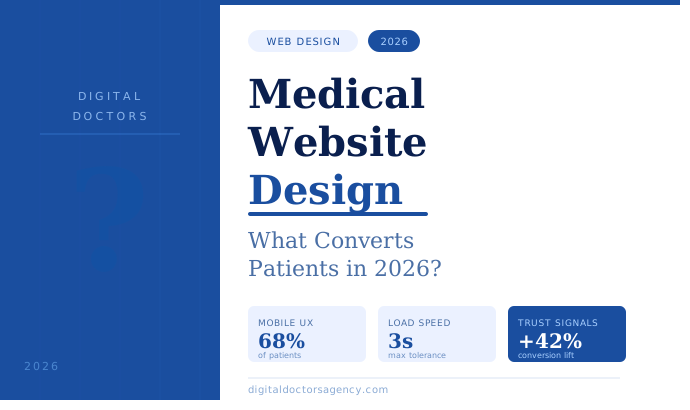
Medical website design in 2026 focuses on speed, trust, clarity, and frictionless booking. High-converting healthcare websites combine mobile-first UX, clear calls-to-action, patient-focused messaging, and strong trust signals—resulting in 2–5x higher patient conversion rates compared to outdated designs
What Is High-Converting Medical Website Design?
High-converting medical website design is a patient-centered approach that removes friction, builds trust, and guides users toward booking an appointment quickly and confidently.
Here’s the shift in 2026:
Old mindset:
“Make it look professional.”
New mindset:
“Make it convert.”
What Actually Drives Conversions in 2026?
Conversions are driven by speed, clarity, trust signals, and ease of booking.
1. Speed Is Non-Negotiable
If your site takes more than 3 seconds to load…
You’re losing patients.
Real-world example:
A clinic reduced load time from 5.2s → 2.1s
Result:
- 27% increase in bookings
- Lower bounce rate
Fast websites feel trustworthy. Slow ones don’t.
2. Mobile-First Design Wins
Over 70% of patients browse on mobile.
Yet I still see:
- Tiny buttons
- Hard-to-read text
- Broken layouts
👉 That kills conversions instantly.
3. Clear, Visible CTAs
Patients shouldn’t have to “figure out” what to do.
High-performing CTAs:
- “Book Appointment”
- “Call Now”
- “Schedule Consultation”
👉 Place them:
- Above the fold
- In the header
- Repeated throughout the page
4. Trust Signals (This Is Huge)
Trust signals reduce hesitation and increase patient confidence in choosing your clinic.
Must-have trust elements:
- Patient reviews
- Doctor credentials
- Certifications
- Before/after results (with consent)
- Real photos (not stock images)
Here’s what most clinics miss…
They talk about themselves.
Patients care about:
- Results
- Safety
- Experience
Shift your messaging.
The Medical Website Conversion Checklist (2026)
A high-converting medical website follows a structured checklist focused on UX, trust, and conversion optimization.
✅ Conversion Checklist
UX & Design
- Mobile-first layout
- Fast loading speed (<3 seconds)
- Simple navigation (max 5–7 menu items)
Conversion Optimization
- Clear CTA above the fold
- Sticky booking button
- Click-to-call functionality
Trust & Credibility
- Google reviews embedded
- Doctor bios with credentials
- Testimonials with real names/photos
Content
- Patient-focused messaging
- Service pages with clear benefits
- FAQs addressing concerns
Technical
- Secure (HTTPS)
- HIPAA-compliant forms
- Analytics tracking
👉 If your site misses even 3–4 of these…
you’re likely losing patients daily.
Website Structure That Converts
A structured, intuitive layout guides patients from awareness to booking without confusion.
Ideal Page Flow
- Hero Section
- Clear headline
- CTA button
- Trust indicator
- Services Overview
- What you offer
- Quick benefits
- Social Proof
- Reviews, testimonials
- Doctor Introduction
- Build credibility
- Call to Action
- Book now / contact
Micro Example
A clinic changed their homepage headline from:
“Welcome to Our Practice”
To:
“Relieve Back Pain Without Surgery—Book Your Consultation Today”
Conversions increased immediately.
Why?
Clarity.
Common Mistakes That Kill Conversions
Most conversion issues come from poor UX, unclear messaging, and lack of trust signals.
Biggest Mistakes I See
1. Too much information
Overloaded pages overwhelm users.
2. Weak CTAs
If it’s not obvious, users won’t act.
3. No trust signals
Patients hesitate without proof.
4. Slow website
Kills engagement instantly.
👉 Here’s the truth…
Patients decide in seconds.
Not minutes.
How Much Should You Invest in Medical Website Design?
Medical website design typically costs $3,000 to $25,000+, depending on complexity and features.
Investment Breakdown
| Type | Cost | Best For |
|---|---|---|
| Template Site | $3K–$7K | Small clinics |
| Custom Site | $8K–$20K | Growing practices |
| Enterprise Site | $20K+ | Multi-location clinics |
👉 But here’s the real question…
How many patients are you losing right now?
That’s the real cost.